Episode Transcript
[00:00:00] Speaker A: Would you consider giving away a part of your body to someone you may never meet? Kayla here. And that's the question I'm sitting with. After listening to this episode of Imperfectly Honest, Elizabeth was joined by Liz Nelson to explore her decision to donate a kidney and why she doesn't see herself as a hero for doing it. From the initial question of could I? To the much more personal reality of would I? Liz shares what the process actually looks like physically, emotionally, and logistically, with the hope of demystifying what it means to be a living donor. Because for Liz, this isn't about doing something extraordinary. It's about helping more people understand what's possible and expanding the conversation around generosity, risk, and choice. If you take anything away from this episode, let it be the knowledge that something that feels so out of reach is actually more accessible than we think.
So, without further ado, on to the episode, enjoy.
[00:01:02] Speaker B: This isn't Perfectly Honest. I'm Elizabeth, and after about four decades, I'm shifting from the person I always thought I should be to the person I really want to be, in part because I've learned to be honest both with myself and just about everybody I encounter. It's not always perfect. Sometimes it's a rocky road. But I'm learning a lot by being imperfectly honest and thought you might learn something too.
[00:01:31] Speaker A: The Imperfectly Honest podcast is for informational, educational, and entertainment purposes only. This podcast does not provide medical advice and is not intended as a substitute for the diagnosis and treatment provided by a licensed trained physician, psychotherapist, or other health professional. This podcast expresses the individual opinions of Elizabeth and her guests and does not constitute professional medical or mental health services. In sharing her experiences, specific names, places, and other identifying information may be changed to protect the privacy of the people involved.
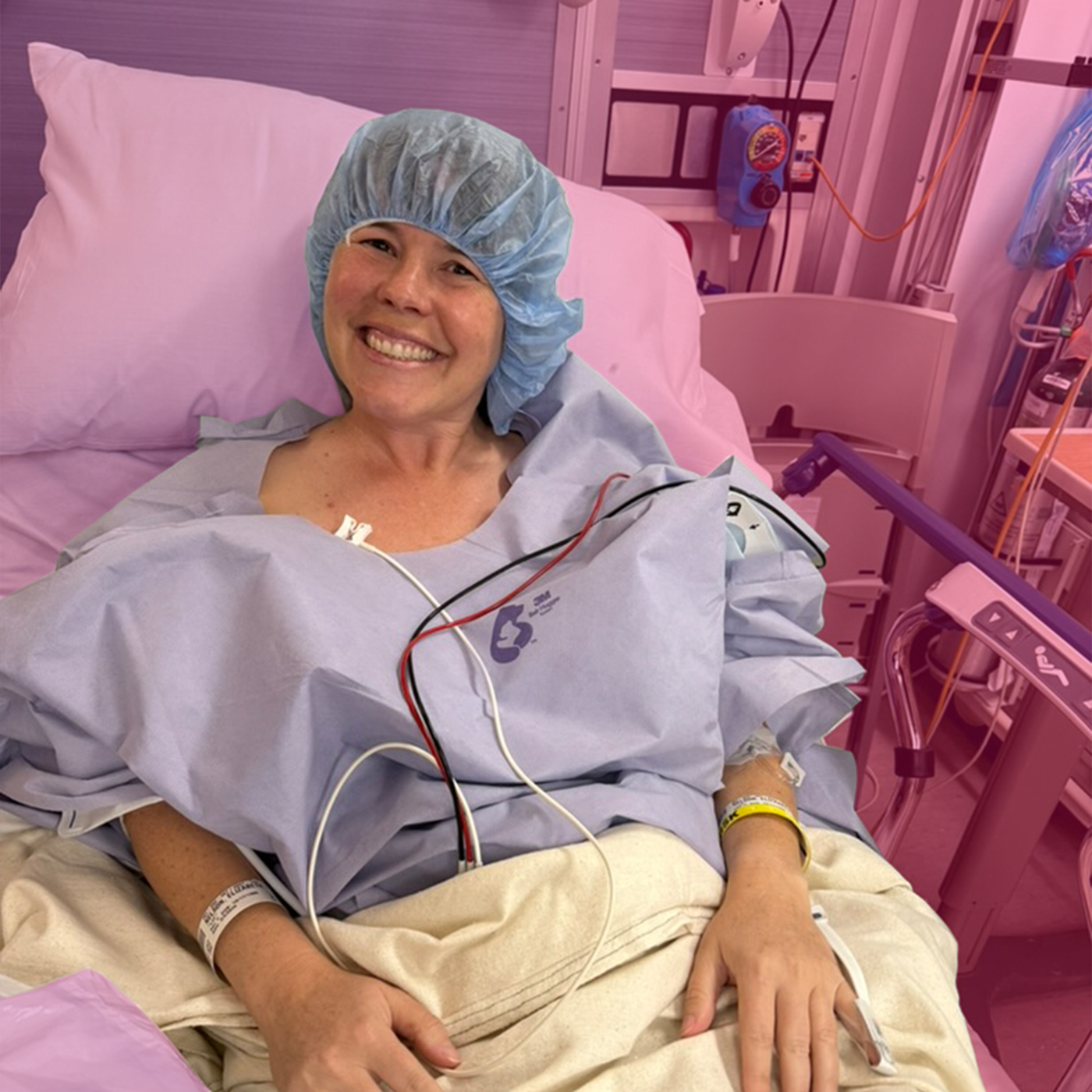
[00:02:08] Speaker B: Hey, all. We have my friend and colleague Liz Nelson here with us today to talk about something you may not think about a lot, but is actually a pretty big issue, which is that we have a significant shortage of kidneys in this world, and Liz has generously gone through the process of donating her kidney recently.
And I'm so inspired by this generosity and just wanted to tell a little bit of her story on the podcast. Liz, thank you for being here, and more importantly, thank you for doing this.
[00:02:46] Speaker C: Thank you, Elizabeth. It is a real delight for me to be able to talk to you on the podcast and to share with your audience about my experience.
It is something that I'm increasingly able to talk about and something I'm quite proud of having been through, and I'm excited for this opportunity.
[00:03:10] Speaker B: Great.
So, just to give us context, do you want to quickly introduce yourself?
[00:03:16] Speaker C: Absolutely.
I am an executive business partner, executive assistant, virtually for five clients, including you, Elizabeth, and the Imperfectly Honest project.
And I have been doing this for about five years. Before that I was a professor of sociology and a gourmet chocolate shop owner. And so I have a interesting professional past.
And I am based in Los Angeles where I live with my husband Derek and my 6 year old kid Cole.
[00:03:51] Speaker B: Great.
And Liz, why on earth did you decide to donate your kidney?
[00:03:56] Speaker C: Well, the first, most important reason is that I just learned that I could do it, which I think is part of the motivation for this episode. That people know that they can donate blood, they know they can donate bone marrow. There's a whole bunch of things we know we can donate. We also, most people, I imagine, know that they can donate their body parts to science or medicine after they die by marking that box on your driver's license application.
What I didn't know is that you could donate your kidney while you are still alive. Most people have two kidneys and most people only need one of those to live a long, healthy life.
I learned that I could from one of my other clients, Sue Heilbronner. She had written a blog post about her own future need for a kidney donation. She has polycystic kidney disease.
And she had written a blog post about the disease and about her eventual need for a transplant and about the situation in the US with a lot of people, 90,000 currently waiting for a kidney.
And as her executive assistant, I edited that blog post and that planted the seed. And then about a year later, January 2025, I was feeling a bit overwhelmed by how dark and sort of complicated and divisive our, our national landscape felt to me.
And I decided to start the process of seeing if I could donate a kidney as just some small step I could take some action, some battle against that sense of despair that actually moved me towards a sense of hope and optimism and sort of collective well being. And then the rest was just sort of a process that led to my donation on March 3rd.
[00:06:16] Speaker B: Wow. There's a lot to unpack there.
So sometimes when we're feeling discomfort like you were with the darkness you were feeling, in our world, we do things to move toward comfort. And sometimes it works and sometimes it doesn't. Did this experience deliver on feeling a little bit better about the darkness in our world?
[00:06:39] Speaker C: It absolutely did, in part because one, it felt as though, you know, there's a lot of things that are outside of our control.
And this was something that felt in my control in the same way that, you know, when you're overwhelmed with work, you might clean your house or focus on some small task that regains this sense of reminding yourself of all the ways that you have autonomy and power. And this was something I could do.
And the other piece of it that really helped was meeting all the people or talking to other people who had similar experiences or who felt inspired by my decision to donate that it just felt like my choice was the stone in a pond. And I could sort of see the ripple effects in other people feeling a little bit more hope and a little bit more brightness. And that was really comforting to me.
The world, of course, is still a mess, but at least for the person who received my kidney and the people in that person's life and all the people that are related to sue, who needs a kidney, that the world feels a little more optimistic and oriented towards hope.
[00:08:02] Speaker B: Yeah. And I think the state of the world can be in the eyes of the beholder. I mean, don't get me wrong, there's a lot of evil happening right now. I'm in. And there's also a lot of scary things happening that are long term problems. For instance, I'm in Montana today and it's supposed to be 85 degrees in the middle of March.
So I wanted to showcase this because I think it can be so easy for us to. To just talk about what's wrong in this world instead of what's right.
I'm curious.
Sometimes when you give something, you actually get back more in return or you get back something unexpected in return. So is there something that came back to you that you were able to reap the rewards of from giving this generous gift?
[00:08:57] Speaker C: I think that there's a lot of things. One, on a very practical level, it puts a lot of things in perspective for me. It helps me regain my. My sense of, you know, what is true, what are stories I've made up in my own life.
I had the opportunity to get a lot of medical testing done as part of the approval process.
And that was really cool to learn that my body is really healthy and doing a great job.
I also had an opportunity to really think about the worst case scenarios of if I died as a result of the surgery, how would I feel about leaving behind my husband and child?
So those sort of big things, little things, those parts of my life that I don't always spend a lot of time really contemplating. And then the other thing that really came back to me Was this motivation that I didn't have before to share about living kidney donations?
Being on a podcast is not my natural tendency. It's not my natural desire.
And yet I was eager to take this opportunity because I simply want more people to hear about this possibility for themselves, for people they know that you could donate a kidney and save someone's life and improve the lives of those related to the recipient. And the cost to me has really been so small. It's been minor inconvenience of recovery and driving to the clinics to get tested. But ultimately this has been an overwhelmingly positive and really meaningful experience that also then gives me an opportunity to talk about it with other people who might be predisposed towards this act of altruism, of being a Good Samaritan, and they just didn't yet know that this was one way that they could give to others.
[00:11:25] Speaker B: Is there one non obvious question that people should be asking if they are considering giving their kidney?
[00:11:33] Speaker C: That's a good question.
I think for me, the question that took me a while to figure out was sort of why not?
That this was a pretty long process. I signed up in January of 2025. I donated on March 3rd of 2026.
And there were a lot of steps in that process where I could have changed my mind with no judgment. No one expects you to do this. There's no pressure. There's just a lot of medical professionals who are doing everything they can to make sure that there are the best possible outcomes for both the donor and the recipient.
When I first clicked the I want to donate a kidney button, I thought I was really committing to it then and there.
And it turns out that I had so many opportunities to really rethink and make sure that it felt like the right choice for me.
And in the meantime, I got a lot of feedback about my health. I learned a lot more about the process.
And I think even if I later decided that the timing wasn't right for me or that this actually wasn't a good choice for me, for whatever reason, that even the process of meeting these people and going through the process felt really rewarding.
[00:13:01] Speaker B: What's the most interesting thing that you learned about yourself from this process?
[00:13:06] Speaker C: It turns out that I'm pretty cavalier with my health.
I have a lot of confidence in medical professionals.
Once I knew how good surgeons have gotten at kidney transplants, I just trusted that. I have a lot of trust in the process.
There's huge incentives among transplant professionals to make sure that I was a good candidate, especially since I was doing a non directed donation, that they wanted to make sure that I was doing this and that there wouldn't be any adverse consequences to me or my life or my health because of doing it. And the incentive structure for the medical community to make sure that transplants are successful are huge. And I really trusted that system.
I'm someone who's been exposed to a lot of death and sort of grief in my life. My mom passed when I was quite young, and I think that that has given me a little bit of an attitude about this one. Good wildlife we get to live. How do I really seize it? How do I make the most of it? And donating my kidney felt like one thing I could do to really get a good bang for my buck on this life that I'm living.
[00:14:29] Speaker B: Love that.
Did any imperfectly honest conversations arise in this process?
[00:14:38] Speaker C: Well, I'll be honest that it is a very awkward thing to tell someone that I'm donating a kidney. And even now I find it uncomfortable to tell people that I donated a kidney and that that decision saved someone's life. And if I'm being honest, it likely saved multiple lives or improved the quality. If you think about the caretakers in the lives of the recipient, that their lives are dramatically improved.
So while I'm typically an oversharer, happy to be an open book about my life, this was a piece of news that I rolled out a bit more carefully and thoughtfully in thinking about who I should tell. And when it turns out some of that was unnecessary. My life is filled with folks who really admired my decision, championed me, asked how they could help, asked how they could provide support.
There were two very awkward conversations where people weren't actually supportive and they sort of implied disapproval or disbelief. And that caught me off guard. It was hard to explain to someone why I would want to do this thing that felt obvious to me, to someone who couldn't imagine a scenario where they would make the same choice. And those are awkward conversations to have when you're talking about something as seemingly important as donating a major organ to someone I don't know.
[00:16:17] Speaker B: Wow. So that raises a lot of questions for me. So, first of all, what were the reasons for disapproval?
[00:16:25] Speaker C: It's so interesting. I watched a really great documentary called the Confessions of a Good Samaritan. It's on Netflix. I highly recommend it.
And in that documentary, the donor shared how a lot of people question kidney donation because it feels like something you should only do for people that are really important to you.
Whenever I told someone that I was donating a Kidney. The very next question, almost without fail, was, who are you donating to?
And it reveals that we think that you should only do something like donating a kidney to someone really important to you.
And I'm part of the National Kidney Registry's voucher program, which meant that I was donating my kidney to the pool of potential recipients and the NKR would find the person who is the best match. And then five people in my life get a voucher for a kidney if they ever need one.
Only one of those vouchers gets to be redeemed. The others are voided. But I did that so that Sue Heilbronner, my client and your friend, our friend, would be able to qualify, be prioritized for a living kidney when her time for a kidney transplant comes, likely in the next year or two. And so I found myself having to explain that I didn't know the person who would receive my actual kidney.
Even now, all I know about the person is that they live in Massachusetts and that they. That they likely are a typo type blood type O.
And I found myself having to then say, well, I'm donating to someone I don't know. But on behalf of this person I do know. And that gave a lot of people a framework for understanding this choice. For me, I think that if I just told people that I was donating to a total stranger, I think the levels of disapproval and questioning would have been higher. People don't understand how or why you would go through major surgery and give up a primary organ to save the life of someone you don't know.
For me, it feels really obvious, but I think for a lot of people, that doesn't make any sense at all.
[00:19:00] Speaker B: There's so many deep questions of that. It's just a good thing to think about in general, of what are you willing to do for people you don't know?
Because at the end of the day, you may know your great grandmother very well and she may only have two years to live and you may not know a 10 year old who really needs it, who could live a lifetime and have an extraordinary impact on people's lives.
Which decision do you make there? There's so many questions.
[00:19:30] Speaker C: Yeah. And I found out that you could actually.
This didn't appeal to me at all. But there are websites devoted, there are GoFundMes devoted to people that need a kidney. People are trying to get the word out that someone they love is dying, that they're on dialysis, that they've been on dialysis for years and that they desperately need a kidney to live a full life, and you could go and pick someone. And I can't even begin to imagine making that choice. I think, for me, that question isn't something that I needed to weigh. All I needed to weigh was whether I was willing to donate a kidney.
And I then allowed someone else to make the decision of who would get that kidney.
And that felt very freeing to me because I don't want to say who.
Whose life has more value or who is more deserving. And I remember telling my coordinator at some point that as far as I was concerned, it didn't matter to me if my kidney went to someone who was serving a lifetime sentence in prison versus someone who is going to cure cancer. Because the point was not that I get to choose what my kidney does once it's outside my body, but that I get to choose to dramatically improve one person's life. And that alone was what felt important to me.
[00:21:03] Speaker B: Wow. That's impressive. Surrender. Hypothetically speaking, even though you were donating it to someone you didn't know, could you put certain parameters around the criteria?
[00:21:15] Speaker C: I think I likely could have, but I didn't. I think that if. If that was something I really wanted to do, then I would have gone and tried to select my recipient. I did realize after I was matched. So the National Kidney Registry activates me in their list, and then they find the person who's the best match for me. I'm. I'm blood type O, and apparently I have, quote, favorable anatomy. And so it made my kidney sort of a hot commodity on the list. And I was matched very quickly. Once I was matched in the National Kidney Registry's list, I decided to ask my coordinator whether my kidney was going to one particular person.
It's a public figure that I just decided I'd rather my kidney not go to that one person.
And so I made that one request, and my coronary confirmed that the name of my recipient did not match the name of the person I did not want it to go to.
But beyond that, I really just decided that whoever gets my kidney is the person that my kidney is meant to go to.
[00:22:32] Speaker B: You know, it's funny how people respond differently, and I'm. I'm curious.
The people who shared disapproval, did they ask you any questions before that they shared that disapproval, or did they just freely share why they were disapproving?
[00:22:55] Speaker C: They asked me who I was donating to, but even in asking that question, their tone was a bit different.
[00:23:05] Speaker B: Right.
[00:23:06] Speaker C: And most people ask that question from a place of Real curiosity or care.
And they asked it in a way that at least I perceived, and this could entirely be my judgment that I perceived as coming from a place of who do you know that possibly deserves that?
And even one of the persons said, gosh, I would never do that. Maybe I would donate a toe to my kid.
Which cracked me up that. That of all the things, you donate a toe. But I think one of the things that I've learned in this process is this distribution of altruism in the population is not evenly distributed. That some people feel like this is a really good, right, wonderful thing to do and others don't. And I found myself really trying to find surrender and comfort and being okay with the fact that that just means people are different. And that doesn't make me right or better or them somehow worse or not as good. And ultimately that's what makes people and human experience so interesting, is that we are different. And it's perfectly okay that they had a different reaction to the news than other people in my life.
[00:24:38] Speaker B: Yeah, Part of why I asked that question is because I've decided not to have children.
And it's funny how many people have shared their disapproval for that.
And it's also funny how few people have asked me questions before, sharing their disapproval in a tone that at least I perceived to indicate that they were 100% sure that they were right about their viewpoint.
Now, I'm sure that being a mother is not my calling, but there was a time when I really wanted to be a mother and I couldn't get pregnant. And I'll never forget, I was at this wedding and there was this big family and they all had these young children. And you know, at weddings, young children are at their best. They're in cute little outfits and they're dancing. And it's easy to think that having a child is the most perfect thing when you see a kid dancing at a wedding.
So I was finding myself feeling pretty sad that I was having trouble getting pregnant.
And this woman that I had never even met before and who barely knew my now ex husband came over and asked me not if, but when I was planning to start a family. And I said, I'm not sure.
We're not sure if we are going to have children.
And her answer was, what a selfish thing to say.
She said, there is no better gift in this world than to be a mother.
And I get so frustrated with my daughter's generation. She was my mother's age with my daughter's generation, who just feels as if they have A higher purpose than being a mother.
And there's so many things to be frustrated about that statement.
But what she didn't know is that I was sitting there desperately wanting to be a mother and unsure whether I could make that happen.
[00:26:50] Speaker C: And I think that so often the similarity here, of course, is that people have their default view of the world and what makes the world right and good and wonderful.
[00:27:01] Speaker B: And.
[00:27:02] Speaker C: And when people use their default view as what is right and good to have a conversation with other people about something so deeply personal as having children or donating an organ, that you just run up against reality and other people's experiences in a way that can be really hard for your own worldview.
And may I recommend that in the future, if someone asks when you're planning to have children, you could kindly respond, well, when are you planning to donate an organ?
Because honestly, donating an organ was way easier for me than having a child.
My kidney is off living its best life somewhere in Massachusetts. Meanwhile, I need to go pick my 6 year old up later this afternoon and deal with whatever demands he wants to have of my time.
But I think you're right that people come to these really personal questions with a lot of assumptions and judgment.
And it is hard to explain not only that your point of view is different than theirs, but the practical realities of your life might be really different than theirs.
And it can be difficult to respond with sympathy for their narrow point of view when they're judging you.
And I think that one of the things that I've learned is to be a little bit more delicate when I share that I have a child or people often ask me if we are only having one, which has a lot of judgments in it.
And in the same way, learning to be delicate about sharing about personal medical history or family medical history in a way that invites more curiosity than judgment around child rearing as well as kidney donation. It's a fascinating Venn diagram of conversations with strangers.
[00:29:15] Speaker B: Well, and in the spirit of always considering the opposite side of your story, I would prefer that people voice their opinion after they ask me a couple questions to have a better feel at how I've arrived at my conclusion. I've made decisions that I've regretted just like everyone else. And there's been people along the way who have either failed to open their mouth to share some thoughts as to why I may not want to make that decision, or they opened their mouth in a way that made me feel defensive and made me even more hell bent on making that decision.
Sometimes I've looked back and realized that their opinion was something that I ignored, but it really had some merit. And regardless of whether I wish that I would have taken that feedback or if I was glad that I didn't take that feedback, hearing that opinion will help me inform decisions in the future.
[00:30:18] Speaker C: I think that's exactly right that it is so natural for us to become defensive about our choices or even the thought process if we, if we've not yet made a decision. We are in the process of making a decision. It's an open question and it is difficult to receive any input. When that person didn't pause to check in on how we're making that decision or why we're making that decision, they jump to conclusions.
When a friend shared a bit of shock and disapproval that I was donating to someone that was not in my immediate family, that it did make me pause and think through what the implications of her.
Of her point was.
And it can be difficult to weigh that when, when the decision can feel so deeply personal and fraught as is.
And yet I agree, Elizabeth, that if we can be careful to take the core of their argument and let go of the tone of voice or the judgment, but really take into consideration the heart of what they were asking, then we can feel more confident and more assured in the decisions we're making.
[00:31:47] Speaker B: And I would also suggest paying attention to the tone of the questions that you ask as well.
I just want to underscore that.
I want to go back to one more thing that you said on this judgment topic. So. So you shared that you were hesitant to tell others that you likely saved a life, and not just a life, but likely saved a few lives and perhaps impacted many more.
Where does that self judgment come from? Are you nervous about almost bragging about saving people's lives? I'd love to hear more.
[00:32:23] Speaker C: I don't think I'm all that special on this regard.
And it is humbling.
I think it's a sense of modesty and humility that people jump to.
Oh my gosh, you're so amazing. You're an angel, you're a hero. And that praise feels out of proportion to the decision and to the choice I made. That it feels a little bit unwarranted. Not that I don't think that what I did was really cool. And I'm very proud of the choice I made.
And at the same time, I almost want to normalize this because I want more people to seriously consider whether they could also do the exact same thing if I told someone that I went and donated Blood today, people would say, wow, that's cool.
When I tell people I donate a kidney, it's a magnitude of reaction that feels way too big, because I really want this to become a much more boring, normal, not very exciting decision for people to make.
Of course it's a huge decision.
Of course.
I feel really honored and lucky that I was able to do this on behalf of someone else.
And I don't think that I'm a hero. I don't think that I'm a unicorn. I don't think that I'm special. I think that I'm just like the many other people who do good deeds on behalf of their family members and their friends and their neighbors and people that are in far flung parts of the world.
And it is hard to share that from a place of directness rather than overwhelming embarrassment or modesty.
[00:34:34] Speaker B: And generosity doesn't always require sacrifice. Sometimes doing something that feels easy for you can be the best thing that you can do. Because a lot of times, things that feel easy for you are what you're best at.
[00:34:49] Speaker C: Exactly. And I think this.
This felt. Donating a kidney felt so obvious and easy to me, and it became the shift from an active decision I was making to something that I was just going to do.
And that felt really meaningful. In fact, it's probably one of the most in the top five things I've done in my life that has real meaning to me.
And I know that this was really important in a way that I can't even express to the person who received my kidney.
But, man, did it also mean so, so much to me.
I just can't imagine another accomplishment or award or honor that I could have that would have so much significance to me.
I feel very lucky that I am healthy, that I got this extra kidney that I didn't need, that I will live a very long, healthy life, that I had excellent medical care.
Wow. How lucky I am.
[00:36:01] Speaker B: Yeah. And, you know, people often tell me that I'm so brave to share the kinds of things that I share on this podcast and to ask the questions that I'm willing to ask. And it doesn't feel brave to me. It's always been second nature. And the reason why I'm doing this podcast is because I feel like that is a little bit unique and that maybe this unique thing that I have, this unique trait that I have, is a good way for me to make a difference, since it feels so easy.
And I want to tell you that giving a kidney does not feel easy to me.
You talked a little bit about how there's things that we can't control in this world, and doing this helped you feel a little bit more in control. And donating a kidney feels to me like I would be out of control.
That's largely, I think, because my life is a big question mark right now and my biggest coping mechanism is physical fitness.
And I thought about this in the context of an elective surgery that I'm considering at the moment that I've opted out of for now. And it's because when I have question marks in my life, so many question marks in my life, it feels like a really big ass to give up six weeks of heavy exercise.
And I'm grateful that you've done that because I know that exercise is important to you. You ran a half marathon right before you did this transplant, so thank you.
[00:37:45] Speaker C: I did. And I think that one of the other reasons I believe that you are doing the podcast and the Imperfectly Honest project is to nudge people towards more honest conversations, even when they're uncomfortable, even when they don't happen exactly as you'd want them to happen.
And in the same way me donating a kidney, which feels as obvious to me as you being honest, feels to you, that it is my way of really stepping into who I am, what my purpose is, and trying to let other people know, hey, this is an option.
You know, you could donate kidney. You can have hard, honest conversations.
You can, whatever our gifts are that, that the way to honor those gifts is to share them with other people so that they also might think about their own gifts and how they can share them with others. So I'm just as in awe of you for those hard conversations you have, those great questions you ask, and I'm grateful that you share them with the world.
[00:39:01] Speaker B: Thank you. And I'm not going to tell you that you're a hero.
[00:39:05] Speaker C: Thank you.
[00:39:08] Speaker B: I'm not even going to tell you I'm in awe of you. Although I still told you that maybe seven times, I'm realizing, as we're having this conversation.
But I am going to tell you thank you for doing this, because even though I also care deeply for Sue Heilbrenner, she, and some of you may know, was my co founder in the Merge Lane Venture Fund. She's had a profound impact on my life and I love her and I feel unwilling to do this for her right now, which makes me sad and also really grateful that you did it, Liz. Thank you.
[00:39:47] Speaker C: Well, I am delighted that I was qualified as a donor, that I've had such incredible support, not only from my family, but also from my clients like you, Elizabeth, and that I had the privilege, honestly, of being able to save someone's life. And hopefully, if I say that enough time, it'll become a little bit less awkward for me to say so. Thank you for the opportunity to say it in a. In a public forum like the podcast.
[00:40:20] Speaker B: So if someone feels inspired to donate their kidney or another organ, where should they go?
[00:40:26] Speaker C: To find more information, I highly recommend either kidney.org or the program.
The organization that I used to donate was the National Kidney Registry, nkr.org NKR will help you by providing a mentor.
They handle all the expenses for the testing.
They will find you a recipient.
If you already have someone you know that will need a kidney donation in their lifetime, they will pair you with someone to make that transplant a reality.
They have been incredibly supportive. They're an excellent organization and I felt really pleased to be a part of all that they are doing to solve the problem of kidney transplants in our country.
[00:41:24] Speaker B: Liz, thank you again. And until next time, listeners, I hope you're feeling as inspired by this conversation as I am.
[00:41:34] Speaker C: Bye.